Cashmere is one of the rarest natural fibres in fashion, with a single goat yielding just 150 to 250 grams of usable undercoat per year, roughly the amount needed for a small scarf (Sustainable Fibre Alliance, 2024). For fashion founders sourcing luxury knitwear, understanding cashmere is the difference between a €200 sweater that pills after three wears and one that lasts a decade. The fibre commands premium pricing because it is genuinely scarce, difficult to comb, and requires specialist knitting.
What this guide covers
This guide covers what cashmere actually is, where it comes from, why it costs what it does, how it compares to merino wool, and what Portuguese factories charge per kilo of yarn in 2026. Everything below reflects the manufacturer-side view, based on production runs across our factory group in the northern Portuguese textile cluster.
Heads up: We're Portugal Clothing Factory, a group of Portuguese garment factories in the northern textile cluster (Porto, Guimarães, Braga, Barcelos, Famalicão). The pricing and production data in this article comes from cashmere runs coordinated across the group between 2024 and 2026, plus the wider trade sources cited throughout.
Key takeaways
Key Takeaways
- Cashmere comes from the fine undercoat of the cashmere goat, hand-combed once a year during the spring moult
- One goat yields 150 to 250 grams of usable fibre per year, versus 3 to 6 kilograms of wool from a single sheep (Sustainable Fibre Alliance, 2024)
- Fibre diameter ranges from 14 to 19 microns, finer than merino wool at 17 to 24 microns
- Portuguese cashmere yarn prices in 2026 run €55 to €90 per kilo for Grade C blends, up to €200 to €320 for baby cashmere
- Roughly 8% of our documented factory group produces cashmere garments, mostly sweaters, cardigans, and scarves at MOQs of 100 to 300 units
Try it free: Pressure-test your production cost with our garment cost calculator. 60 seconds, no email required.
What Is Cashmere?
Cashmere is the fine, downy undercoat of the cashmere goat, separated from the coarser outer guard hairs and spun into yarn used for luxury knitwear. Global cashmere production was an estimated 25,611 tonnes of greasy fibre in 2024, unchanged on 2023 (Textile Exchange, 2025). That is roughly 1.4% of global greasy wool volume and about 0.02% of the 132 million tonnes of fibre the world produced that year, so cashmere is a rounding error in volume terms and a category of its own in value terms. Its scarcity, softness, and warmth-to-weight ratio explain its permanent position at the top of the natural-fibre pyramid.
The fibre grows underneath the goat's outer coat as insulation against harsh winter cold on the Central Asian steppe. In spring, as temperatures rise, the goat moults. Herders comb the loose undercoat by hand over several sessions, then send raw fibre to dehairing facilities where guard hairs are mechanically separated. What comes out is the pale, ultra-fine down that eventually becomes yarn.
Where it sits among the luxury fibres
Within the animal-fibre family, cashmere sits above merino wool in fineness and above alpaca in softness, but below vicuña in rarity. That mid-luxury tier is exactly what makes it commercially viable: rare enough to command premium pricing, but not so rare that mid-market brands cannot access it.
Citation Capsule: Cashmere is the fine undercoat of the cashmere goat, hand-combed each spring and separated from coarser guard hairs before spinning. Global raw cashmere output was an estimated 25,611 tonnes of greasy fibre in 2024, roughly 1.4% of global greasy wool volume and about 0.02% of all fibre produced that year, which makes it one of the rarest commercial animal fibres in fashion (Textile Exchange, 2025).
Other names you might see
Cashmere is sometimes labelled "kashmir" (the historical spelling, from the Kashmir region where the trade first reached European markets), "pashmina" (the ultra-fine variant traditionally used for shawls, from goats in the Himalayan foothills), or "cashmere down". Portuguese mills refer to the yarn as "caxemira" in factory documentation. Whatever the label, the origin animal and processing sequence remain the same.
What Does Cashmere Mean?
"Cashmere" is an anglicisation of Kashmir, the Himalayan region whose woven shawls reached European buyers in the early nineteenth century. The word named the trade route before it named the fibre. The goats were never confined to Kashmir, and almost none of today's supply comes from there.
The short answer
Cashmere means the fine undercoat of the cashmere goat, and the yarn and cloth made from it. It is a wool in the everyday sense and an animal hair in the technical one, which is why "cashmere wool" and "cashmere" describe the same thing on a label.
The legal answer
The word is not a free marketing term. Under US labelling rules, fibre sold as cashmere must come from a cashmere goat, average no more than 19 microns in diameter, and contain no more than 3% by weight of fibres over 30 microns (CCMI). A garment calling itself cashmere outside those limits is mislabelled, not merely low grade.
Citation Capsule: The word cashmere is an anglicisation of Kashmir, the Himalayan region whose shawls reached European markets in the early nineteenth century; the fibre itself is now combed almost entirely in China and Mongolia. Legally, cashmere means fibre from the cashmere goat averaging no more than 19 microns, with no more than 3% by weight exceeding 30 microns, under the US Wool Products Labeling Act definition that CCMI maintains.
Where Does Cashmere Come From?
Cashmere production is concentrated in a small band of Central and East Asian countries, with Mongolia and China (specifically Inner Mongolia) together accounting for roughly 90% of world supply. Mongolia produces about 40% of the global total, China around 50%, and Iran, Afghanistan, and India making up the remainder (Sustainable Fibre Alliance, 2024). The concentration reflects a specific climate requirement: cashmere goats grow their finest undercoat in regions with extreme winter cold and hot summers.
Mongolia
Mongolia is the country most associated with premium cashmere. Herds are semi-nomadic, the climate reaches -40°C in winter, and the fibre is typically pale, long, and fine. Mongolian cashmere is often positioned as the "cleanest" trade origin because most of the supply chain traceability programmes (Sustainable Fibre Alliance's Cashmere Standard, for example) originated there.
China (Inner Mongolia)
China is the volume leader, with Inner Mongolia the dominant producing region. Chinese cashmere covers the full quality spectrum: some of the world's finest yarn is spun in Inner Mongolia mills, and so is a large share of the mid-market and low-grade material that ends up in fast-fashion blends. Grade matters much more than country of origin at this scale.
Iran and Afghanistan
Iranian and Afghan cashmere is traded in smaller volumes and tends to be slightly coarser on average (16 to 19 microns rather than 14 to 16). It plays a meaningful role in mid-tier product but rarely appears in top-grade luxury yarn.
Citation Capsule: Mongolia and China together account for roughly 90% of global cashmere production, with Mongolia at 40% and China at 50%. Iran and Afghanistan supply smaller volumes, generally at slightly higher micron counts. The concentration reflects a hard climate requirement: cashmere goats only grow their finest undercoat in regions with sub-zero winters (Sustainable Fibre Alliance, 2024).
What Makes Cashmere So Expensive?
Cashmere is expensive because supply is genuinely constrained at the animal level. A single goat produces only 150 to 250 grams of usable fibre per year after dehairing, and one adult sweater requires roughly 300 to 400 grams of finished yarn (Sustainable Fibre Alliance, 2024). At 150 to 250 grams per goat and 300 to 400 grams of yarn per sweater, one sweater consumes the annual output of roughly one and a half to two and a half goats, so about two on an average clip. Compare that to sheep's wool, where one animal yields 3 to 6 kilograms per year, enough for a dozen sweaters.
Three inputs drive the price: yield per animal, labour intensity of collection, and micron rating of the final fibre.
Yield per goat
The 150 to 250 gram figure is not raw comb-out. Raw cashmere weighs considerably more, and a large share of it is guard hair and grease removed at the dehairing stage. Published averages for the raw clip sit near 150 grams per goat, so treat the upper end of this range as a good Mongolian herd rather than a typical one. What survives is the fine down that goes into yarn. High-quality Mongolian herds produce closer to 250g; older or poorly-nourished animals sit at the bottom of the range.
Hand-combing labour
Cashmere is not sheared like sheep's wool. Combing is done by hand during the spring moult over several sessions, because the fine undercoat sheds gradually. That labour input, spread across small herder households in remote regions, means the cost per gram is high before the fibre even reaches a spinning mill.
Micron rating
The finest cashmere sits at 14 to 15 microns, comparable to the finest merino at the high end of luxury. Fibre that is finer, longer, and paler commands a substantial premium. A single micron reduction in average fibre diameter can shift wholesale yarn pricing by 20 to 30%.
Practical planning: across cashmere production runs coordinated through our factory group in 2024 to 2026, the fabric-and-yarn cost typically accounts for 55 to 70% of the total garment cost for cashmere sweaters, versus 30 to 40% for cotton knits. That fibre-cost dominance is why yarn selection is the single biggest decision in cashmere production budgeting.
What Are the Properties of Cashmere?
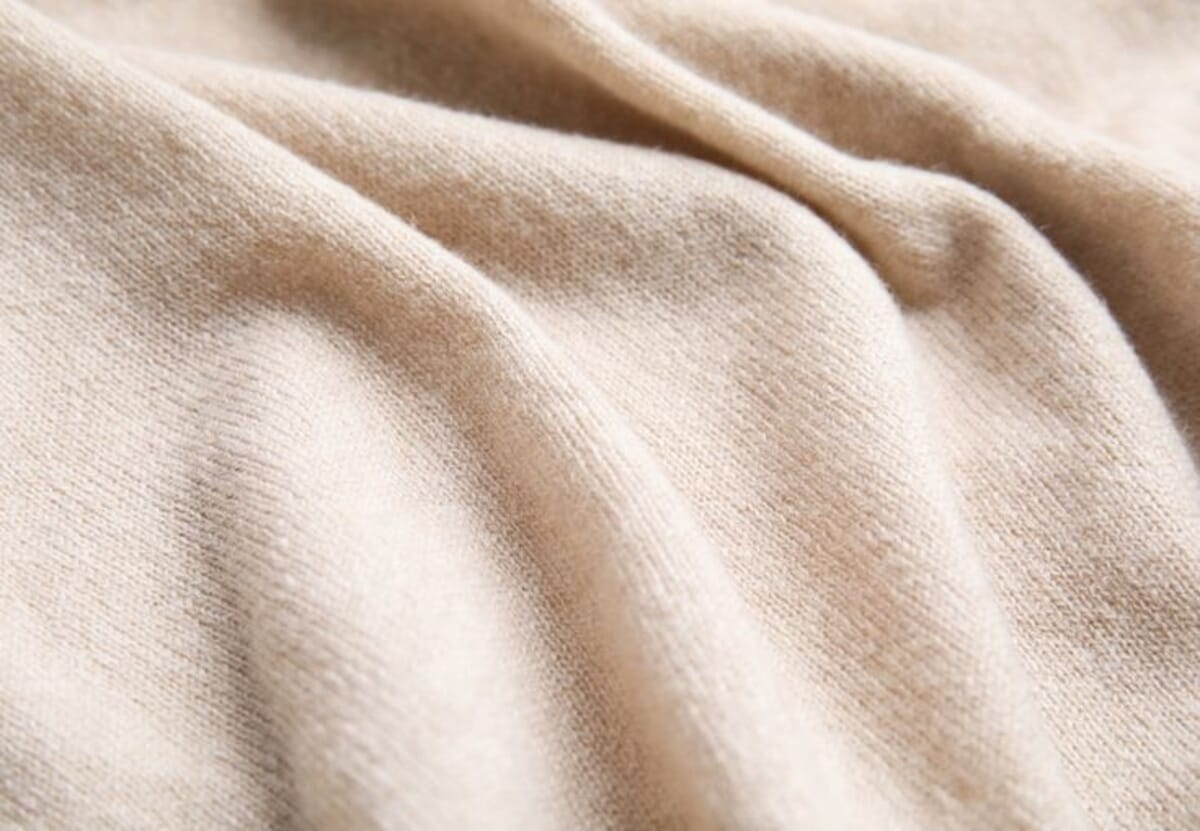
Cashmere combines an unusual set of properties for a natural fibre: extreme softness, high warmth-to-weight ratio, low weight, and moderate durability when knitted correctly. It insulates better than sheep's wool per gram, which is why a fine cashmere sweater can feel warmer than a much thicker wool one. Be careful with the multiple: trade sources quote anything from two to eight times, CCMI itself says "up to eight times warmer than wool", and no single figure is independently established. An earlier version of this article credited CCMI with a three-times figure it does not publish.
Four properties matter most for garment planning.
Softness
Cashmere feels dramatically softer against the skin than merino or standard wool because the fibre diameter is finer. The prickle people feel from wool comes from fibres coarser than about 30 microns, which are stiff enough to resist bending and push into the skin instead; published work puts the threshold at roughly 30 to 32 microns, and once about 5% of the fibres in a fabric exceed it, most wearers call the fabric prickly. An earlier version of this article put the threshold at 25 microns. Cashmere clears it by a wide margin, and the US legal definition of cashmere enforces that margin directly: no more than 3% by weight of fibres may exceed 30 microns.
Warmth-to-weight
Cashmere insulates better than sheep's wool per unit weight, which is why a 300 gram cashmere sweater can stand in for a much heavier lambswool one and why it dominates travel-friendly, lightweight winter layers. The mechanism is fineness plus the air trapped between crimped fibres, not a magic property of the fibre.
Drape
The fibre is longer and finer than most competing animal fibres, which means cashmere knits drape softly and hang cleanly. That property makes it desirable for cardigans, dresses, and elegant crewnecks where structure matters as much as warmth.
Durability caveat
Cashmere is more delicate than merino. It pills more readily in the first few wears (especially at friction points like underarms and cuffs), and it requires gentle washing. Grade A cashmere pills less than Grade B or C, but no cashmere is pill-proof.
Citation Capsule: Cashmere fibre diameter ranges from 14 to 19 microns, well below the roughly 30-micron prickle threshold and finer than merino wool at 17 to 24 microns. US law defines cashmere as averaging no more than 19 microns with no more than 3% by weight of fibres over 30 microns (CCMI). Cashmere insulates better than wool per gram, though the multiples quoted in the trade run from two to eight times and none is independently established.
How Does Cashmere Compare to Merino and Regular Wool?
The three animal fibres serve overlapping but distinct roles in fashion. Cashmere leads on softness and warmth-to-weight; merino leads on durability and price-per-performance; regular wool leads on cost and structure. We have withdrawn a claim that 65% of European luxury knitwear launches used cashmere, credited to EURATEX: EURATEX publishes trade, employment and output data for the European industry, not the fibre composition of product launches. What is documented is the size of the end market, with cashmere clothing worth US$3.63bn in 2025 and Europe taking 39.59% of it (Fortune Business Insights, 2026).
Fibre diameter
Cashmere runs 14 to 19 microns. Merino runs 17 to 24 microns, with superfine grades under 19. Standard sheep's wool runs 22 to 30 microns. That gap in fibre diameter translates directly into softness against the skin, and it is the whole reason cashmere costs what it does.
Warmth
Per gram of fibre, cashmere insulates better than merino and better again than coarse wool, with our merino versus cashmere comparison putting cashmere at roughly twice merino at equal knit weight. Treat any precise multiple as a trade claim rather than a measured constant.
Durability
Merino is the most durable of the three for daily wear, and modern merino has been engineered to resist pilling. Cashmere is the most delicate, particularly at Grade B and C. Standard wool is coarse but sturdy.
Cost
Cashmere yarn runs €55 to €320 per kilo depending on grade. Fine merino yarn runs €18 to €45 per kilo. Standard wool yarn runs €10 to €22 per kilo. A cashmere sweater's yarn cost is 5 to 15 times higher than an equivalent merino one.
When brands choose which: across production runs in our factory group, the decision usually comes down to positioning. Brands aiming for luxury retail price points (€250+ per sweater) go cashmere. Brands aiming for performance-driven premium (technical outdoor, elevated basics, €120 to €200) go fine merino. Brands aiming for classic mid-market winter go standard wool or wool blends. Cashmere-merino blends are the most common compromise, keeping some of the softness while cutting yarn cost by 40 to 60%.
What Garments Are Made with Cashmere?
Cashmere is used almost exclusively in knitwear and accessories where the fibre's softness and warmth-to-weight properties justify the yarn cost. Sweaters and coats are expected to hold 60.58% of the cashmere clothing market in 2026 (Fortune Business Insights, 2026), with scarves, hats, socks, throws and the occasional woven dress sharing the rest. A unit-volume split of 70% sweaters and cardigans and 20% scarves, credited here to Textile Exchange, has been withdrawn: Textile Exchange reports fibre volumes, not garment categories.
Garment applications by category
Common cashmere garment applications:
- Sweaters and pullovers: the highest-volume category, from lightweight crewnecks (fine gauge, 12gg) to chunky rollnecks (heavier gauge, 5gg to 7gg)
- Cardigans: buttoned or open-front, often in fine gauge with ribbed cuffs and hem
- Scarves and stoles: high volume in accessories, benefits from cashmere's drape and warmth
- Socks: blended with nylon or merino for durability, ultra-premium winter category
- Hats and beanies: compact, small-yarn-consumption garments that fit lower MOQ tiers well
- Throws and blankets: homeware crossover, uses the same yarn as apparel
- Woven dresses and coats: rare because cashmere is more common in knit form, but a small luxury segment exists
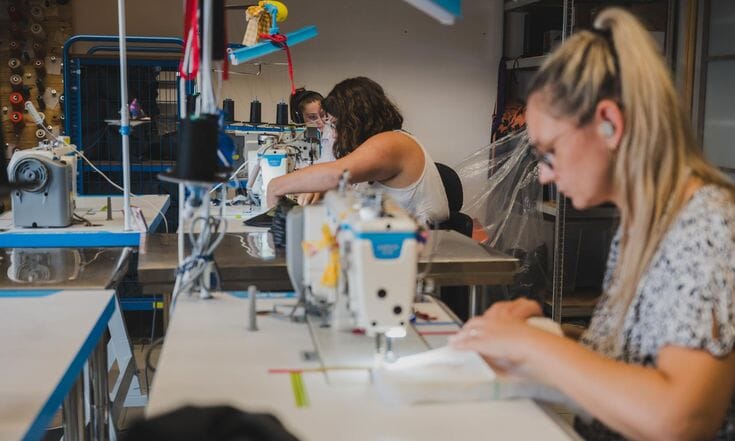
Production observation: roughly 8% of our documented factory group produces cashmere garments regularly. That share is smaller than for cotton knits because cashmere requires specialist flat-knitting equipment, dedicated fibre handling, and separate finishing lines. The factories that do run cashmere tend to be specialists, and their MOQs sit between 100 and 300 units per style because the underlying yarn booking has similar minimums.
Find your factory: Browse the free factory directory preview, or unlock the premium directory for €39 to see 80 documented Portuguese factories with cashmere capability flagged.
What Is a Cashmere Sweater?
A cashmere sweater is a knitted pullover or cardigan made from cashmere yarn, typically using 300 to 400 grams of yarn in an adult size. Sweaters and coats are the dominant end use, expected to take 60.58% of the cashmere clothing market in 2026 (Fortune Business Insights, 2026).
What separates one from another
Three variables decide almost everything about how a cashmere sweater feels and ages: the grade of the yarn, the gauge it is knitted at, and the finishing. Two sweaters both labelled "100% cashmere" can differ by a factor of four in yarn cost and by far more in how they look after a winter.
- Gauge. A 12gg fine-gauge crewneck uses roughly 30% less yarn than a 7gg chunky knit at the same body dimensions, so gauge drives both the price and the drape.
- Ply. 2-ply is the common sweater construction; single-ply is lighter and more fragile, and 4-ply or 6-ply gives the dense, structured hand luxury brands charge for.
- Finishing. Steam-set finishing is what stops a sweater pilling badly in the first five wears. Skipping it is the cheapest saving a factory can make and the one customers notice fastest.
What one should cost
At 350 grams of yarn, the fibre alone runs roughly €19 to €32 in Grade B, €49 to €77 in Grade A, and €70 to €112 in baby cashmere. Ex-factory, a Grade A Italian-yarn crewneck lands near €96 at 500 units. A sweater retailing at €50 cannot be what its label says.
Citation Capsule: A cashmere sweater uses roughly 300 to 400 grams of yarn in an adult size, and sweaters and coats are expected to account for 60.58% of the global cashmere clothing market in 2026 (Fortune Business Insights, 2026). Yarn grade, knit gauge and steam-set finishing explain most of the quality difference between two garments carrying the same "100% cashmere" label.
What Does Cashmere Yarn Cost in Portugal?
Cashmere yarn prices at Portuguese mills in 2026 range from €55 per kilo for Grade C blended yarn to €320 per kilo for premium baby cashmere. Grade, origin, spinning system and certification are the four cost drivers. We have withdrawn a figure putting them at roughly 85% of price variance, which implied a regression nobody has run, along with the ATP citation attached to it: ATP is the sector association and publishes no cashmere yarn price survey. Every euro figure on this page is a quote from a Portuguese knitter. Portugal has 11,965 textile and clothing companies and a deep knitting heritage concentrated in the northern cluster.
Pure cashmere by grade
Grade A pure cashmere yarn runs €140 to €220 per kilo. Grade B runs €90 to €140. Grade C is usually blended (rarely sold as 100% cashmere) at €55 to €90. Baby cashmere, harvested from young goats during their first moult, sits at the top at €200 to €320 per kilo.
Blended yarns cut cost
Cashmere-merino blends run €55 to €120 per kilo depending on the cashmere share (typically 20% to 50%). Cashmere-silk blends run €95 to €180 per kilo, positioned for dressier knitwear with more drape and sheen.
Certifications add premium
The Good Cashmere Standard certified yarn (covering animal welfare, grassland stewardship, and herder livelihoods) adds 15 to 25% over uncertified equivalents at the mills we book through. Note the name: there is no "Global Cashmere Standard", and earlier versions of this article used that invented title. CCMI runs no certification scheme at all; it publishes the fibre definition and campaigns on label compliance, so it cannot be the certificate on your yarn sheet.
Practical planning: for a fine gauge cashmere sweater using roughly 350 grams of yarn, Grade B pure cashmere adds €32 to €49 in yarn alone. Grade A adds €49 to €77. Baby cashmere adds €70 to €112. Comparing those numbers against a €200 to €500 retail price makes clear why cashmere sweaters carry the margin structure they do.
Need a tech pack? Get a factory-ready single-style tech pack for €79. See what's included.
What Is the Difference Between Grade A, B and C Cashmere?
Cashmere is graded on fibre diameter (microns) and fibre length (millimetres), with Grade A the finest and longest and Grade C the shorter, coarser material sold in blends. Understand first that A, B and C are commercial conventions, not a legal standard: no regulator defines them, spinners apply them slightly differently, and a mill's "Grade A" is only as good as the micron and length figures on its certificate. The one definition with legal force is the labelling rule that cashmere must average no more than 19 microns with no more than 3% by weight over 30 microns. A claim that only 30% of the global clip meets Grade A, credited to CCMI, has been withdrawn; CCMI publishes the fibre definition and no grade-distribution data.
| Grade | Micron | Length | Yarn cost/kg | Typical use |
|---|---|---|---|---|
| Baby cashmere | 13-14 | 40+ mm | €200 to €320 | Ultra-luxury sweaters, shawls |
| Grade A | 14-16.5 | 34-40 mm | €140 to €220 | Premium sweaters, cardigans, scarves |
| Grade B | 16-19 | around 34 mm | €90 to €140 | Mid-luxury sweaters, blends |
| Grade C | 19-30 | around 28 mm | €55 to €90 (blend) | Blended garments, accessories, low-tier |
Micron and length bands follow spinner and trade convention, which is not a legal standard and varies between suppliers. Yarn costs are PCF quotes from Portuguese knitters, 2024-2026. Grade C fibres run past the 19-micron legal mean for cashmere, which is why Grade C is blended rather than sold as 100% cashmere.
Grade A cashmere
Grade A material comes from prime adult goats, is roughly 14 to 16.5 microns in diameter, and runs 34 to 40mm in fibre length. It produces yarn that resists pilling better than lower grades, drapes cleanly, and holds shape after washing. Almost all luxury-positioned sweaters (€300+ retail) use Grade A.
Grade B cashmere
Grade B is the largest commercially available tier, at roughly 16 to 19 microns and around 34mm length. It is what most mid-luxury and premium mass-market cashmere sweaters use (€120 to €280 retail). Well-knitted Grade B is often indistinguishable from Grade A in the first few wears, though it pills sooner.
Grade C cashmere
Grade C is coarser and shorter, roughly 19 to 30 microns and around 28mm, and it is often combed from the legs and tail rather than the neck and belly. It rarely sells as 100% cashmere because the resulting yarn would pill heavily. Instead, it is blended with merino, cotton, acrylic, or nylon, and used for entry-level cashmere-labelled garments.
How to verify grade
For brands sourcing yarn, three signals matter. First, ask the mill for a fibre-content certificate showing average micron and length; reputable Portuguese mills provide this on request. Second, check for The Good Cashmere Standard or SFA Cashmere Standard certification, and ask for the certificate rather than the claim; CCMI is a trade association that publishes the fibre definition, not a certifier. Third, request a physical yarn sample and knit a test swatch; Grade A yarn feels notably smoother, and swatches pill less after 20 mechanical rub cycles.
Production observation: in cashmere runs coordinated through our factory group, the sample-to-shipment timeline for cashmere sweaters averages 10 to 14 weeks, with 2 to 4 sample rounds typical. Yarn booking is the pacing item. Grade A and baby cashmere often need to be booked 6 to 8 weeks ahead because premium spinners run limited-capacity batches once or twice a year.
Talk to our team: Get in contact and we'll tell you which 2 to 3 factories in our group actually fit your brief.
Which Cashmere Yarn Grades Actually Reach Portuguese Knitting Houses?
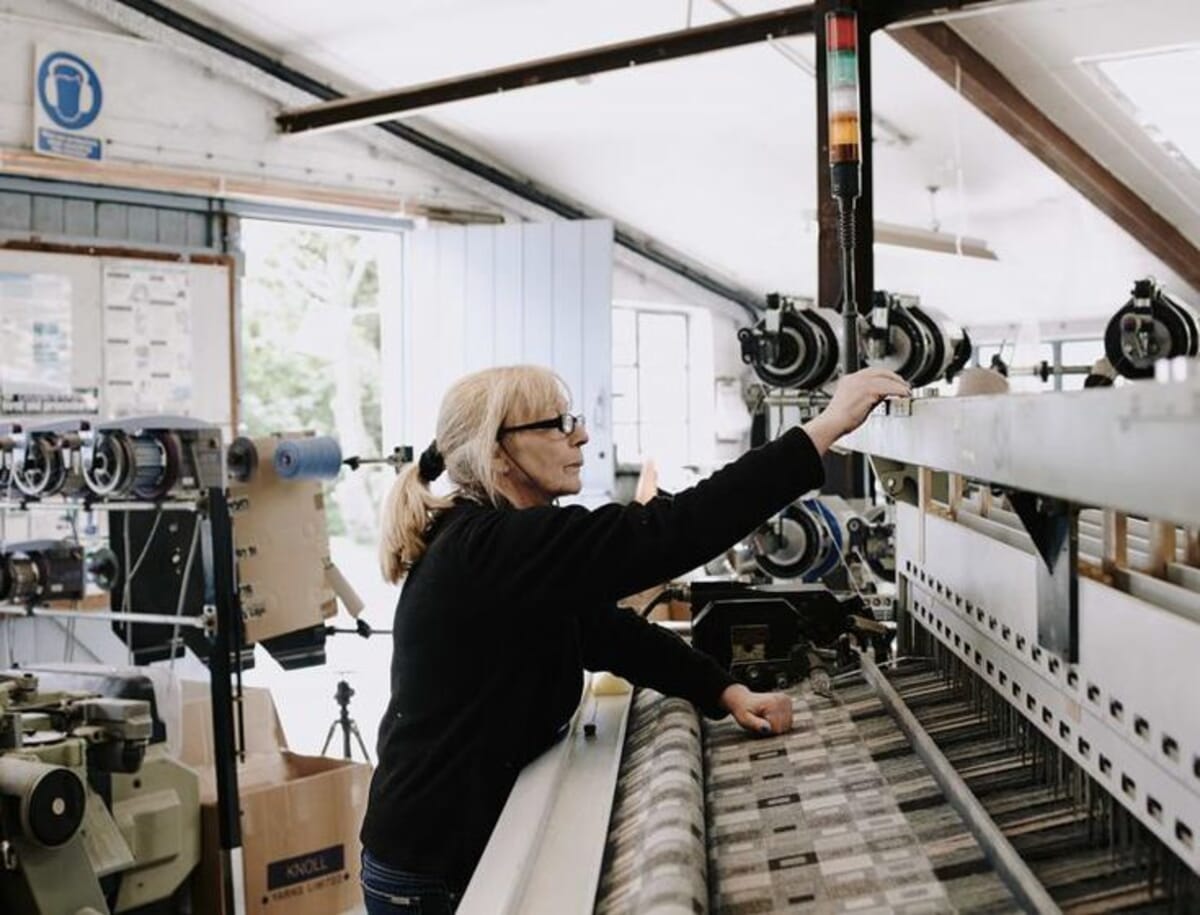
Portugal is not a cashmere-spinning country. Yarn arrives from Italian spinners (Cariaggi, Zegna Baruffa, Loro Piana Manifattura), Scottish spinners (Todd & Duncan), or directly from Mongolian and Chinese mills. Cariaggi alone supplies a large share of the Italian luxury cashmere yarn market (Cariaggi Fine Yarns Collection, 2024), and its yarn feeds most Portuguese knitters running premium tiers.
Cashmere yarn origin by market position (2/26 Nm count):
| Yarn origin | Micron typical | Yarn price at Portuguese knitter | Positioning |
|---|---|---|---|
| Cariaggi (Italy) | 14.5-15.5 μm | €160-220/kg | Luxury, drape-forward |
| Loro Piana Manifattura (Italy) | 14.0-15.0 μm | €190-280/kg | Ultra-luxury |
| Todd & Duncan (Scotland) | 15.0-16.5 μm | €120-180/kg | Heritage, structured |
| Erdos / Chinese spinners | 15.5-17.5 μm | €70-120/kg | Mid-market, blends |
| Gobi / Mongolian direct | 14.5-16.5 μm | €90-150/kg | Traceable Mongolian |
Sources: Cariaggi collection catalogues (2024), PCF factory group yarn quotes (2024-2026).
Does the spinner's country matter?
Micron matters more than country of origin. A Chinese Grade A yarn at 14.5 microns behaves like Italian Grade A at 14.5 microns. What Italian spinners deliver on top is fibre-length uniformity, spinning consistency across large batches, and traceability documentation that Cariaggi and Zegna Baruffa have built over five decades. On the Portuguese knitting side, Impetus (Barcelos) and category specialists in the Vale do Ave run both Italian and Chinese yarn programmes depending on the founder's positioning brief.
Which cashmere certifications actually mean something
Certifications and traceability standards worth understanding:
- RWS (Responsible Wool Standard) covers sheep wool and does not cover cashmere. The goat-fibre standard in the same Textile Exchange family is the Responsible Mohair Standard, which covers angora goats, not cashmere goats. Do not accept "RWS cashmere" on any yarn sheet, the claim is invalid either way.
- The Good Cashmere Standard (Aid by Trade Foundation) covers animal welfare, herder livelihood and grassland stewardship, anchored in Inner Mongolia. It currently spans around 9,100 farms and 4.3 million goats, with roughly 2,200 tonnes of cashmere verified.
- SFA Cashmere Standard (Sustainable Fibre Alliance) is the Mongolia-anchored equivalent. More than 20% of global raw cashmere supply now comes from SFA-certified farms, which is wider than the Mongolia-only framing an earlier version of this article gave it.
- CCMI is the trade association that wrote the fibre definition most labelling law follows. It verifies nothing and issues no certificate, so treat "CCMI certified" on a yarn sheet as a red flag rather than a credential.
- OEKO-TEX Standard 100 Class I on finished garments meets baby-safe chemical thresholds, relevant for luxury kidswear knitwear programmes.
Cost per garment by volume
Cost per garment at 100 / 300 / 500 / 1000 unit MOQ (2026):
| Programme | 100 units | 300 units | 500 units | 1000 units |
|---|---|---|---|---|
| Grade B (16-18 μm) fine gauge crewneck | €82 | €68 | €58 | €49 |
| Grade A (14.5-15 μm) Italian yarn crewneck | €135 | €112 | €96 | €82 |
| Baby cashmere (13-14 μm) crewneck | €195 | €168 | €148 | €128 |
| 70/30 cashmere-merino blend crewneck | €58 | €48 | €41 | €34 |
Source: PCF factory group cashmere production runs (2024-2026). Ex-factory, excluding brand markup.
The gap between Italian and Chinese Grade A yarn on a crewneck at 500 units is roughly €30 per garment. That is real money, but the Italian yarn also delivers longer fibre length (36mm+ vs 28-32mm) and roughly 40% fewer pilling complaints after 20 wash cycles.
Citation Capsule: Portuguese knitters source cashmere yarn from Italian spinners (Cariaggi, Loro Piana Manifattura, Zegna Baruffa), Scottish spinners (Todd & Duncan), and Chinese or Mongolian direct suppliers. Italian Grade A cashmere yarn at 2/26 Nm count sits at €160-220/kg for Cariaggi and €190-280/kg for Loro Piana Manifattura, roughly 2x Chinese Grade A pricing at the same micron (Cariaggi Fine Yarns, 2024). Traceability certifications like The Good Cashmere Standard and SFA Cashmere Standard cover roughly 30% of Mongolian raw supply combined.
What Mistakes Do Founders Make With Cashmere?
Around 70% of the cashmere tech packs we review from first-time founders contain at least one specification gap that either forces a substitution or breaks the margin model (PCF factory group data, 2024-2026). The recurring mistakes are always the same.
- Specifying "100% cashmere" without a micron target. The mill will substitute the cheapest 100% cashmere available, often Grade C blended-yarn from Chinese spinners. Always specify micron (14.5-15.5 μm for Grade A), fibre length (36mm+), and preferred spinner (Cariaggi, Todd & Duncan, or Erdos as fallback).
- Making a "baby cashmere" claim on non-baby yarn. Baby cashmere is fibre from goats under 12 months during their first spring moult. Substituting adult Grade A and calling it baby cashmere is a labelling violation, not marketing licence.
- Under-spec on gauge. A 12gg (fine gauge) sweater uses roughly 30% less yarn than a 7gg (chunky) sweater at the same body dimensions. Founders quoting for chunky knits without adjusting yarn poundage miss the retail price target by 20 to 40%.
- Skipping steam-set finishing. Cashmere sweaters knitted without proper steam-set finishing pill dramatically in the first 5 wears. Portuguese knitters running proper finishing add 3-5 days to the timeline but deliver measurably fewer pilling complaints.
- Ignoring wool disclosure on cashmere-merino blends. Blend certifications must match. A 70/30 cashmere-merino blend claiming "RWS certified" needs the merino portion to actually be RWS-certified merino. Portuguese knitters have caught blend mislabelling in around 15% of first-time cashmere runs.
The three that cost the most money
Decision matrix: when to choose cashmere
The matrix below maps the call to the commercial situation rather than to the fibre.
| Choose cashmere when... | Consider a different fibre when... |
|---|---|
| Retail price supports €200+ (Grade A) or €150+ (Grade B blend) | Retail is below €150 (choose fine merino at 17-18 μm) |
| The sweater is a hero SKU that will carry brand identity | The garment sees hard daily use (choose merino for pilling durability) |
| MOQ per style is 100+ units to hit yarn booking minimums | MOQ is under 50 units (choose stock merino yarn) |
| You have a traceability story (Cariaggi, Todd & Duncan, or SFA-certified) | You need an "cruelty-free" or "vegan" claim (all animal fibres fail) |
| Weight-per-warmth matters (travel knitwear, layering pieces) | Structured knits with cable stitches need firmer twist (choose lambswool) |
The pattern across cashmere pushbacks: founders treat "cashmere" as a single input. In reality, the yarn choice defines 55 to 70% of the finished garment cost and roughly 90% of the perceived quality after 20 wash cycles.
Where Does Cashmere Fit in Your Range?
The practical takeaway across the sections above: match cashmere to the product categories where its properties actually matter, specify it clearly on the tech pack (name the branded fibre or exact composition), and place production with a Portuguese factory in the subset that stocks the yarn or has the finishing lines built for it.
Get the spec right and the fabric becomes a repeatable, reliable choice. Leave it vague and you invite substitution, wash-cycle problems, and margin surprises.
Running into production issues? Get in contact and tell us what you're making. We're a group of documented Portuguese garment factories and we answer every serious brief within 24 hours.
Frequently Asked Questions
How can I tell if a cashmere garment is authentic?
Four checks. First, read the composition label against the law rather than looking for a certificate: cashmere must average no more than 19 microns with no more than 3% by weight of fibres over 30 microns, and CCMI, the body that wrote that definition, runs no consumer certification scheme, so "CCMI certified" is not a thing. Second, feel the fibre: real cashmere is soft without being slick, and synthetics feel slippery. Third, rub the fabric briskly for 30 seconds; real cashmere warms your palm within a few seconds. Fourth, check the composition tag against the price, because a €50 "100% cashmere" sweater is almost certainly not. For a sourcing decision rather than a shop-floor one, the only real answer is a lab fibre-content test.
Is cashmere warmer than wool?
Yes, per gram of fibre, though be sceptical of precise multiples. Trade sources quote two to eight times and CCMI itself says "up to eight times warmer than wool", with no independently established figure behind any of them. What is reliable is the direction and the mechanism: finer, crimped fibres trap more air per gram, so a 300 gram cashmere sweater does the work of a much heavier lambswool one.
What is baby cashmere?
Baby cashmere is the fibre combed from young goats during their first spring moult, usually before their first birthday. The fibre is finer (13 to 14 microns) and softer than adult Grade A, but yields per animal are even smaller. Baby cashmere yarn runs €200 to €320 per kilo at Portuguese mills in 2026, and is used almost exclusively in ultra-luxury sweaters and shawls.
Why does my cashmere sweater pill?
All cashmere pills, especially in the first 5 to 10 wears. Pilling is short fibre ends working their way out of the yarn under friction. Grade A pills less than Grade B because fibres are longer. Wash gently, use a cashmere comb to remove pills after the first month, and avoid friction points (heavy backpack straps, seatbelts) where possible.
Is cashmere ethical?
It depends on the supply chain. Traditional Mongolian hand-combing is animal-welfare-positive and provides livelihoods to nomadic herders, but overgrazing on Central Asian grasslands has been documented as an ecosystem risk. Certifications like The Good Cashmere Standard and the Sustainable Fibre Alliance's Cashmere Standard address both animal welfare and grassland stewardship. Certified programmes covered an estimated 36% of global cashmere in 2024, down from a 47% peak in 2023 (Textile Exchange, 2025), so the certified share fell rather than grew.
What is the MOQ for cashmere production in Portugal?
MOQs for cashmere garments at documented Portuguese factories typically run 100 to 300 units per style. That is higher per-unit than cotton knits (which start at 50 to 100 units) because cashmere yarn has its own booking minimums at the spinning mill. Lead time runs 10 to 14 weeks, with 2 to 4 sample rounds average.
Can cashmere be blended with other fibres?
Yes, and it commonly is. Cashmere-merino blends cut yarn cost by 40 to 60% while preserving much of the softness. Cashmere-silk blends add drape and sheen for dressier knitwear. Cashmere-cotton blends appear in lightweight spring garments. Portuguese mills stock most standard blend ratios (20%, 30%, 50% cashmere) as running yarn.
We're a group of 80 documented Portuguese clothing factories, 25 verified, based in Porto and Guimarães. Tell us your product, volume, and timeline. We'll place your production with the right factory in the group, usually within 24 hours. Flat fees, no commissions, no upsell.
Get in contact Download the directory (€39)Need a tech pack? Get a factory-ready single-style tech pack for €79. See what's included.
Related reading
- Merino vs cashmere: how to choose for winter knits
- GSM guide: what fabric weight actually means
- What is rib knit?
- Fabric sourcing in Portugal
- Sustainable fabrics guide
- OEKO-TEX vs GOTS vs bluesign
- MOQ minimums in Portugal
- Clothing manufacturing costs in Portugal
Sources used in this article
- Sustainable Fibre Alliance - SFA Cashmere Standard and Annual Report (2023): share of global raw supply from SFA-certified farms, herd and yield data
- Textile Exchange - Materials Market Report (2025): global cashmere volume (25,611 tonnes greasy, 2024) and the certified-share series
- CCMI, Cashmere and Camel Hair Manufacturers Institute - the fibre definition behind most labelling law (mean 19 micron cap, maximum 3% by weight over 30 micron). CCMI is a trade association and operates no certification scheme; earlier versions of this article described a "CCMI certification" that does not exist
- Fortune Business Insights - Cashmere Clothing Market, market size and category split (2026)
- EURATEX, European Apparel and Textile Confederation - Facts & Key Figures, cited for European industry context only. EURATEX does not publish the fibre composition of product launches; a claim credited to it in earlier versions has been withdrawn
- ATP, Associação Têxtil e Vestuário de Portugal - sector association, cited for cluster context only. ATP publishes no cashmere yarn price survey; earlier versions of this article credited one for the EUR figures on this page, which are in fact PCF quotes from Portuguese knitters
First-party data
- Cariaggi Fine Yarns - spinner collection catalogues (2024), cited for yarn count and positioning
- PCF internal factory documentation (2024-2026) - cashmere yarn quotes, MOQ thresholds, lead times and per-garment costing from the documented factories in our group
Portugal Clothing Factory is a group of 80 documented Portuguese clothing factories, 25 verified, in the northern textile cluster (Porto, Guimarães, Braga, Barcelos, Famalicão). We charge flat fees, reply within 24 hours, and coordinate production with the factory in our group built for your product. See how we work or get in contact to place your order.
.jpeg)