
The European textile sector is going through the largest regulatory transformation in decades. According to the European Commission (2024), the Ecodesign Regulation (ESPR) makes durability and traceability requirements mandatory for all textiles sold in the EU. Brands that start this transition now are building real competitive advantage. This guide covers certifications, fibres, traceability, EU regulation, and Portugal's role as a sustainable sourcing destination.
In our sourcing pipeline since 2021, we've watched brand attitudes toward sustainability evolve from "marketing positioning" in 2022 to "compliance baseline" in 2026. The brands that started the transition early are now ahead of competitors who treated it as an optional value. The cost differential is real: certified sustainable sourcing carries a per-piece premium, and the brands that positioned for it and built durable supplier relationships have recovered it. The brands that bolted "sustainable" claims onto conventional sourcing are now exposed under EU Directive 2024/825. Several face brand-trust problems harder to recover from than the certification cost itself.
Heads up: We're Portugal Clothing Factory, a group of 80 documented Portuguese clothing factories in Porto and Guimarães. Since 2021, we've placed dozens of brands with these factories, so the practical observations in this article are based on first-hand sourcing experience.
Key Takeaways
- The ESPR textiles delegated act is targeted for 2027, which puts mandatory Digital Product Passport compliance in late 2028 to early 2029
- 68% of global brands already require sustainability certification in supplier contracts (Textile Exchange, 2023)
- The three dimensions of sustainable sourcing are: environmental, social, and circular
- Portugal exported 5,499 million EUR in textiles in 2025, with a short supply chain and built-in EU labour compliance
- Prioritising by environmental impact and purchase volume is the most effective transition approach
- Certified sustainable sourcing carries a real per-piece premium, recoverable only where the positioning and the retailer actually reward it
- EU Directive 2024/825 has applied since 27 September 2026: generic environmental claims and uncertified sustainability labels are now prohibited
Try it free: Pressure-test your production cost with our garment cost calculator. 60 seconds, no email required.
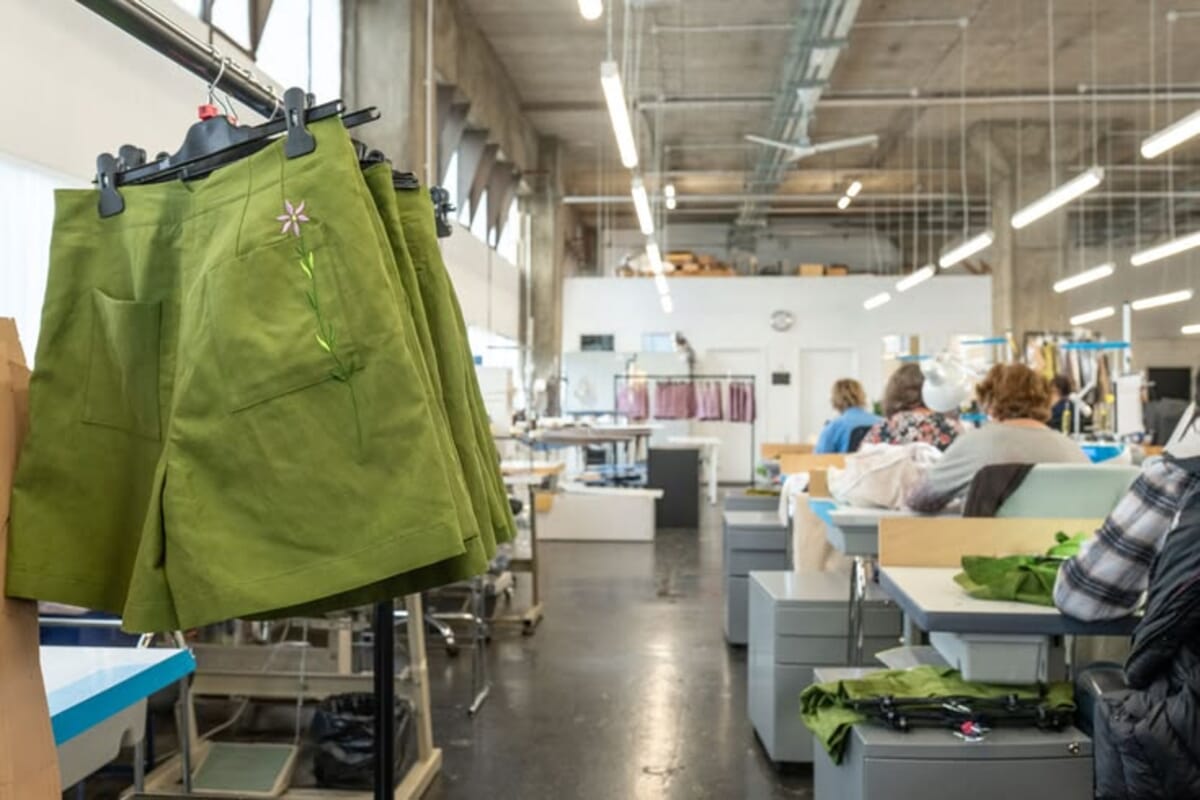
Why Is Sustainable Sourcing No Longer Optional?
The European Green Deal set binding decarbonisation targets, and the EU Strategy for Sustainable and Circular Textiles sets out how this sector is expected to contribute. This isn't a passing trend. It's a new compliance baseline.
The ESPR (Ecodesign for Sustainable Products Regulation) moved from proposal to binding regulation in 2024. It requires textile products sold in the EU to meet minimum standards for durability, repairability, and traceability. Once the textiles delegated act lands, expected in 2027, every garment will need a Digital Product Passport. Compliance dates sit inside the act, typically 18 to 24 months later. That means late 2028 to early 2029. Brands that view compliance as a cost will lose market share to those that treat it as a value proposition. EU regulation is creating a structural competitive advantage for those who act before the deadlines.
What Is Retail Pressure Doing?
On the retail side, large groups like H&M, Inditex, and C&A have already announced sustainable sourcing targets for 2025-2030. This pressure flows down the entire value chain. Suppliers without certification face a real risk of being dropped from approved lists. We've seen this happen across our pipeline: brands that didn't pursue OEKO-TEX or BSCI lost wholesale accounts in late 2024 to brands that did. The regulatory and commercial pressures are converging.
Citation Capsule: The ESPR (EU Reg. 2024/1781) establishes, for the first time, mandatory ecodesign requirements for products sold in the EU, including textiles. The Commission's ESPR working plan, adopted 16 April 2025, targets the textiles delegated act for 2027, with mandatory compliance 18 to 24 months later (European Commission, ESPR Working Plan 2025-2030, 2025).
What Does "Sustainable" Actually Mean in Textiles?
"Eco-friendly," "green," and "sustainable" are terms that lack standardised legal definitions in the EU. EU Directive 2024/825 has applied since 27 September 2026. It bans generic environmental claims where excellent environmental performance cannot be demonstrated. It also bans sustainability labels not based on a certification scheme (EUR-Lex, 2024). A brand that writes "made from sustainable materials" with nothing behind it is now in breach. The separate Green Claims Directive was a distinct proposal and was never adopted, so 2024/825 is the rule that bites. The terminological confusion benefited brands with less genuine commitment for years. That advantage has now gone. "Sustainable" now requires documentary proof, not just communicational intent.
Sustainable textile sourcing has three independent dimensions. All of them matter.
Environmental Dimension: Materials and Processes
This dimension covers the ecological footprint of the fibres used, water consumption in dyeing and finishing, chemical inputs, energy use, and carbon emissions from transport. A garment made with organic cotton but dyed with toxic azo dyes isn't environmentally sustainable as a whole. Full context is essential. The DPP framework is specifically designed to capture this multidimensional reality, not single-attribute claims.
Social Dimension: Labour Conditions
Sustainable sourcing includes ensuring fair wages, safe working conditions, and the absence of forced or child labour throughout the entire chain. Social audits like BSCI and SA8000 exist precisely to verify this pillar. EU regulation under the Corporate Sustainability Due Diligence Directive (CSDDD) is making these audits mandatory for large brands and increasingly expected for smaller ones via cascade requirements from retailers. For more on how Portugal guarantees these conditions, see our guide to textile manufacturing in Portugal.
Circular Dimension: End of Life
Circularity asks what happens to the product when the consumer stops using it. Can it be recycled? Is it biodegradable? Was it designed to last longer? Is it repairable? These questions are increasingly central to sourcing decisions, especially under the ESPR framework, which mandates durability and repairability data in the first wave of the DPP rollout.
What Are the Key Sustainable Textile Sourcing Certifications?
Over 100 sustainability labels exist in the textile sector, but only a few have solid international recognition (Textile Exchange, 2023). According to the same report, 68% of global fashion brands require at least one recognised certification in their supplier contracts, up from 41% in 2019. Choosing the right certification depends on the product, target market, and supply chain size.
The ones that matter: OEKO-TEX Standard 100 for product safety, GOTS for organic fibre plus labour conditions, bluesign for production processes, BSCI for social auditing, GRS and RCS for recycled content, RWS for wool, and Cradle to Cradle for circularity. Each covers a different scope, and many brands need more than one.
Certification Cost Benchmarks
A practical question every founder asks: what does each certification cost? Realistic 2026 ranges:
| Certification | Initial cost (factory) | Annual renewal | Typical brand-side premium per piece |
|---|---|---|---|
| OEKO-TEX Standard 100 | €1,500-€4,000 | €800-€1,500 | €0 (often included) |
| GOTS | €3,000-€8,000 | €1,500-€4,000 | €0.40-€1.20 |
| bluesign | €5,000-€15,000+ | €2,000-€8,000 | €0.50-€1.50 (fabric premium 5-12%) |
| Made in Green by OEKO-TEX | €3,000-€6,000 | €1,500-€3,000 | €0.30-€0.80 |
| BSCI / amfori | €1,500-€5,000 | €1,500-€3,000 | €0 (covered by factory) |
| GRS (Global Recycled Standard) | €2,500-€6,000 | €1,500-€3,000 | €0.50-€2.00 (recycled fibre premium 25-40%) |
| RCS (Recycled Claim Standard) | €1,500-€4,000 | €1,000-€2,500 | €0.30-€1.20 |
| RWS (Responsible Wool Standard) | €2,000-€5,000 | €1,500-€3,000 | €1.50-€4.00 (wool premium 30-50%) |
Source: see in-text citations in this section.
For a brand sourcing from a Portuguese factory that already holds OEKO-TEX and BSCI, the per-piece premium is essentially zero. For a brand pursuing GOTS at scale, the cost is meaningful but recoverable through retail premium.
For a detailed comparison of certifications, with costs, requirements, and recommendations by brand type, see our OEKO-TEX vs GOTS vs bluesign comparison. If you're looking for specific information on GOTS certification in Portugal, see the GOTS certification guide.
Citation Capsule: GOTS (Global Organic Textile Standard) is the most demanding standard for organic textiles. It covers both fibre origin (minimum 70% certified organic natural fibres) and social conditions across the entire production chain. GOTS now lists over 17,000 certified facilities worldwide (GOTS, 2026).
Stacking Certifications Strategically
Most brands eventually hold multiple certifications. The common combinations and what they cover:
| Combination | Covers | Best For |
|---|---|---|
| OEKO-TEX Std 100 + BSCI | Product safety + social compliance | Casual fashion, sustainable basics |
| GOTS + BSCI | Organic + social compliance | Premium organic brands |
| GOTS + GRS | Organic + recycled blend products | Mixed-fibre sustainable brands |
| OEKO-TEX Std 100 + bluesign | Product safety + manufacturing process | Activewear, outdoor performance |
| Made in Green (combined) | Product + facility | DTC brands wanting consumer-facing transparency |
Source: see in-text citations in this section.
Stacking too many certifications is also a marketing trap. Consumers don't typically distinguish between 4 logos and 2 logos on a hangtag. Pick the certifications your retailer requires and your specific claim needs, and stop there.
.jpeg?format=optimal&w=1200)
How Do You Choose the Right Sustainable Fibre?
Fibre choice is the single decision with the greatest environmental impact on any garment. Conventional cotton is one of the most input-intensive crops in the textile chain, both in water and in pesticide use. Transitioning to alternative fibres or certified versions of traditional ones is therefore the most effective starting point for any sustainable sourcing strategy.
The realistic options are organic cotton, Tencel and Lyocell from closed-loop processes, recycled polyester, European linen grown without irrigation, and certified merino wool. Each trades cost against a different environmental gain. Each fibre has specific advantages and limitations.
Fibre Deep-Dive Comparison
| Fibre | Water use (L/kg) | Premium vs conventional | Pros | Cons / limitations |
|---|---|---|---|---|
| Conventional cotton | ~20,000 | baseline | Low cost, abundant, comfortable | High pesticide use, high water |
| GOTS organic cotton | ~2,000 | +15-30% | 91% less water, no pesticides, certified | Limited supply, higher cost |
| Recycled cotton | ~500 | +25-50% | Diverts waste, low water | Shorter fibre = lower quality, often blended |
| European linen | ~1,500 | +20-40% | No irrigation, biodegradable, durable | Wrinkles, limited availability for knit |
| Hemp | ~2,500 | +30-60% | Low pesticide, durable, biodegradable | Coarse hand-feel, limited mill capacity |
| Tencel / Lyocell | ~1,200 | +20-35% | Closed-loop, soft, biodegradable | Higher cost, supply concentrated (Lenzing) |
| Modal | ~1,000 | +15-25% | Soft, less water than cotton | FSC-certified wood pulp required for true sustainability |
| Recycled polyester | ~500 | +25-40% | 59% less energy, diverts plastic waste | Microfibre shedding remains, ultimate recyclability questioned |
| Virgin polyester | ~0 (water) | baseline | Low cost, durable, fast-drying | Petroleum-based, microplastic shedding |
| ZQ merino wool | n/a | +30-50% | Animal welfare, biodegradable, durable | Higher cost, allergenic for some |
| Recycled wool | n/a | +20-40% | Diverts wool waste, lower energy | Limited colour palette, often blended |
Source: see in-text citations in this section.
Recycled polyester doesn't solve the problem of plastic microfibres released during washing. Brands that communicate recycled content as a total solution are oversimplifying. Similarly, "organic cotton" doesn't fix the water-intensive nature of cotton growing regions facing drought. Match the fibre to the real environmental priority for your specific category.
For a full analysis of each fibre, with water consumption data, comparative costs, and recommendations by product type, see our sustainable fabrics guide.
Sustainable Sourcing by Garment Category
Different categories have different sustainability priority levers. Match strategy to category:
| Category | Priority sustainable lever | Typical certification stack | Realistic premium |
|---|---|---|---|
| Basic T-shirts, polos | GOTS organic cotton | GOTS + BSCI | +18-30% production cost |
| Hoodies, sweatshirts | GOTS organic + recycled poly blend | GOTS + GRS + BSCI | +20-35% |
| Tailored blazers, trousers | RWS wool, recycled poly lining | RWS + OEKO-TEX | +25-40% |
| Denim | Recycled cotton, water-saving wash | GRS + bluesign for wash | +30-50% |
| Knitwear | RWS merino, GOTS organic cotton | RWS or GOTS + OEKO-TEX | +20-40% |
| Outerwear / coats | Recycled poly insulation, bluesign fabrics | GRS + bluesign + OEKO-TEX | +25-45% |
| Activewear / technical | bluesign, recycled poly | bluesign + GRS | +20-35% |
| Babywear | OEKO-TEX Class I + GOTS | OEKO-TEX I + GOTS | +25-40% |
| Lingerie | OEKO-TEX + GRS recycled lace | OEKO-TEX + GRS | +20-35% |
Source: see in-text citations in this section.
The implication: target your sustainability investment where it has the most retail-justifiable impact. Babywear consumers pay the premium readily; activewear consumers care about technical performance more than fibre origin; tailoring consumers value heritage and quality more than recycled content claims. Match the sustainability story to what the customer in that category actually values and verifies.
What Is the Digital Product Passport and How Does It Affect Traceability?
The Digital Product Passport (DPP) will require every textile product sold in the EU to carry traceable data. That means fibre origin, manufacturing processes, certifications and end-of-life instructions (European Commission ESPR, 2024). The first sectors covered will be batteries and electronics, with textiles in the next phase. The textiles delegated act is targeted for 2027 and compliance follows 18 to 24 months later. The DPP isn't just a digital record. It's the infrastructure that will make all sustainability claims verifiable. Brands already building traceability systems today will have a significant advantage when the obligation takes effect.
Why Does a Short Chain Make the DPP Easier?
European suppliers, and Portuguese ones in particular, simplify this process. Can you imagine documenting a chain with two local suppliers versus six to ten across three different continents? The difference is radical, both in cost and data reliability. The gap is mostly the time cost of collecting verifiable data from non-EU suppliers, and it is consistently larger the further the chain sits from the EU regulatory perimeter.
For a practical preparation guide, with the data you need to document and how to structure traceability now, see the article on how to prepare for the Digital Product Passport in fashion.
What EU Regulation Is Changing the Textile Sector?
The EU has approved or is implementing four regulations that directly affect textile sourcing. Together, they create the world's most demanding sustainability regulatory framework for textiles, impacting any brand selling in the EU regardless of country of origin (European Commission, 2023). The deadlines are concrete and the consequences real.
Four regulations matter. The ESPR brings mandatory ecodesign plus the DPP, with the textiles act targeted for 2027. EU Directive 2024/825, applicable since 27 September 2026, bans generic environmental claims and uncertified sustainability labels. EPR for Textiles adds extended producer responsibility. The CSRD requires sustainability reporting from large companies. Directive 2024/825 deserves special attention: it is already in force, and banning claims like "environmentally friendly" without verifiable proof is the change with the most immediate impact on marketing teams.
Extended Producer Responsibility (EPR) for Textiles
Less discussed but equally important: EPR for textiles. Several Member States are implementing producer responsibility schemes that require brands to fund collection, sorting and recycling of post-consumer textile waste. France led with a textile EPR scheme in 2007; the Netherlands and Italy implemented similar schemes in 2024-2025. An EU-wide EPR obligation for textiles is expected to follow.
What Does EPR Mean in Practice?
Practical implications for brands selling in EU markets:
- Annual registration with the local PRO (Producer Responsibility Organisation): typical fee €150-500 per country per year
- Eco-modulation fees: per-piece fee that varies based on product environmental characteristics. Pieces using recycled content or designed for recyclability pay less; pieces with mixed fibres or hard-to-recycle materials pay more
- Reporting obligations: typically annual, requiring volume placed on each market by category
What Does EPR Cost per Piece?
Cost impact: typically €0.05-€0.30 per piece for brands at modest scale. Higher for technical or mixed-fibre products. EPR is not a certification; it's a regulatory tax. Plan for it.
For a complete analysis of each regulation, with deadlines, requirements, and practical preparation steps, see our dedicated ESPR and textile regulation 2027 article.
Citation Capsule: The ESPR (EU Reg. 2024/1781) establishes, for the first time, mandatory ecodesign requirements for products sold in the EU, including textiles. The textiles delegated act is targeted for 2027, with mandatory compliance 18 to 24 months after adoption. EU Directive 2024/825, applicable since 27 September 2026, prohibits generic environmental claims without substantiation. Penalties are set by each Member State, and the Unfair Commercial Practices Directive sets a maximum of at least 4% of annual turnover for widespread cross-border infringements (EUR-Lex, 2024).
Why Is Portugal a Sustainable Sourcing Destination?
Portugal has 11,965 active textile and clothing companies employing around 118,000 people (FFMS/PORDATA, 2026). It exported 5,499 million EUR in textiles and clothing in 2025 (INE via Jornal Economico, 2026). It's the 5th largest textile exporter in the European Union. But its competitive advantage in sustainable sourcing goes beyond volume. Portugal offers short-chain traceability, built-in EU labour compliance, and geographic proximity that reduces transport emissions.
For complete data on the Portuguese textile industry, see our dedicated article. If you're comparing sourcing destinations, also see our Portugal vs Bangladesh and Vietnam analysis.
A collection manufactured in Portugal and distributed across the European market carries a materially lower transport carbon footprint than one shipped from South or East Asia, simply as a function of distance and transport mode.
What Does EU Labour Law Already Guarantee?
Compliance with European labour law is automatic for Portuguese factories: national minimum wage (920 EUR/month gross in 2026), regulated working hours, mandatory health insurance, parental leave, and active labour inspection. There's no need for external social audits to verify basic conditions.
The number of Portuguese factories with OEKO-TEX, GOTS, or bluesign certification has been growing consistently. Regions like the Ave Valley, Guimarães and Barcelos concentrate the highest density of certified producers, covering the entire chain from spinning to garment assembly. For European or North American brands needing to respond to growing traceability demands, Portugal represents a simpler solution than it might seem. The chain is shorter, counterparts speak English at most certified factories, and baseline standards are already guaranteed by European legislation. We've seen this transition accelerate over the last two years, with brands moving from Asian sourcing to Portugal specifically because the EU regulatory roadmap rewards short, verifiable supply chains.
Citation Capsule: Portugal exported 5,499 million EUR in textiles and clothing in 2025 and employs around 118,000 people in the sector (FFMS/PORDATA, 2026). Portuguese factories operate under EU labour legislation, eliminating the need for external social audits to verify basic working conditions.
How Do You Transition to More Sustainable Sourcing?
Transitioning to more sustainable sourcing doesn't require changing all suppliers at once. A phased approach based on impact and volume priorities is more effective and less disruptive (Sustainable Apparel Coalition, 2023). Most brands start by auditing what they already have before making any change decisions.
Phase 1: Audit Current Suppliers
List all active suppliers, their locations, the materials they provide, and the certifications they hold. Identify gaps: who has no certification at all? Which materials have the highest environmental impact (high volumes combined with conventional fibres)?
Phase 2: Define Priorities
Not everything has the same impact. Prioritise by the criterion of highest purchase volume combined with highest environmental footprint. Conventional cotton in large volume is usually the most impactful starting point.
Phase 3: Set Concrete Targets and Deadlines
Establish specific targets. "100% of cotton with GOTS or OCS certification by 2026" is a verifiable target. "Be more sustainable" is not. Targets with dates create internal accountability and credible external communication.
Phase 4: Identify Certified Alternatives
Use databases like the Textile Exchange Preferred Fiber & Materials Market Report to identify suppliers with the necessary certifications for each material category. Platforms like portugalclothingfactory.com can also help with this research.
Phase 5: Communicate Transparently
Communicate what you're doing and what stage you're at, not what you aspire to be in the future. "We're converting 40% of our cotton to certified organic in 2025" is more credible, and safer under Directive 2024/825, than "we're a sustainable brand."
Quick Wins vs Long-Term Plays
The transition has both short-term and structural moves. We typically advise founders to mix both:
Quick wins (3-6 months, low cost, high impact):
- Verify what certifications your current factories already hold (you may already have OEKO-TEX without knowing it)
- Switch hangtag and dust bag suppliers to recycled-content options
- Move marketing copy from "eco-friendly" to specific verifiable claims
- Add EU origin transparency to product pages (often free, just disclosure)
- Start fabric audits on top 5 by volume
Long-term plays (12-36 months, higher investment, durable advantage):
- Pursue GOTS certification on hero styles
- Build DPP infrastructure with PLM integration
- Develop direct fabric mill relationships in EU for traceability
- Train sourcing team on Directive 2024/825 claim requirements
- Implement third-party QC and verification across supply chain
The brands that mix both move 2-3x faster than brands that focus only on long-term certification investments while ignoring quick wins.
Common Founder Mistakes in Sustainable Sourcing
Across our pipeline, here are the seven most common mistakes we see in founders pursuing sustainable sourcing:
- Pursuing certification without retailer ask. Investing €5K+ in GOTS because "it sounds the most sustainable" rather than because a specific retailer or buyer requires it. Match the certification investment to a buyer requirement.
- Marketing claims that outrun documentation. Saying "sustainable" when you have OEKO-TEX (product safety only). Directive 2024/825 catches this now.
- Ignoring the recycled fibre microplastic question. Recycled polyester reduces virgin plastic but still sheds microplastics. Brands that present it as "the answer" will lose credibility as consumer awareness grows.
- Sourcing organic cotton from water-stressed regions. GOTS-certified cotton from Pakistan or India is "organic" but the regional water context can be problematic. Source criteria should include geographic context.
- Underestimating the cost of supplier data collection. The certification is the easy part; getting verifiable data from upstream suppliers is the hard part. Budget for this.
- Treating certifications as one-time costs. They're annual ongoing costs. Plan for renewal in year 2 budget.
- Choosing fibres based on virtue signalling rather than category fit. Hemp T-shirts feel rough; bamboo "viscose" is just rayon with a green label. The fibre choice should serve the product, not the press release.
The pattern: most mistakes come from optimising for marketing communication rather than for actual environmental outcome and regulatory compliance. The brands that get this right invest in the fundamentals (data, certification, transparent claims) and trust the marketing to follow naturally.
What Can and Can't You Say About Sustainability?
EU Directive 2024/825 has fundamentally changed the rules for sustainability communication in fashion. In 2021, the European Commission analysed 344 environmental claims from fashion brands and concluded that 53% were vague or misleading and 40% had no verifiable substantiation (European Commission, 2021). The directive was designed to eliminate these practices.
The directive doesn't prohibit communicating sustainability. It prohibits doing so without verifiable evidence. This distinction matters: brands investing in sustainable sourcing have a lot to gain from a level playing field.
Prohibited claims (without substantiation):
- "Made from sustainable materials"
- "Eco-friendly"
- "Green" / "Natural"
- "Better for the planet"
- "Carbon neutral" (without evidence of methodology)
- "Circular" (without specific circular design proof)
- "Climate-positive" (without verified offset data)
Permitted claims (with substantiation):
- "Made with 100% GOTS-certified organic cotton" (with certificate number)
- "Produced in an OEKO-TEX Standard 100 certified factory" (with verifiable identifier)
- "Transport emissions offset via Gold Standard" (with project documentation)
- "Manufactured in Portugal with a two-tier traceable supply chain"
- "Contains 35% recycled content (GRS-certified)"
- "Repairable: spare buttons available via brand programme"
How Customers Actually Verify Claims
A practical reality: customers increasingly use QR codes, certification websites and search to verify claims, particularly in premium segments. We've seen brand-trust events triggered by:
- Customers scanning a QR code that returns no DPP data
- Sustainability marketing claims with no certificate number visible
- Brand statements about "organic" with no GOTS reference
- Recycled content claims without GRS reference
The brands that survive enforcement under 2024/825 will be those whose marketing is conservative relative to their documentation. The brands that don't will face fines (up to 4% of turnover) and brand-trust damage that's harder to recover than the fine itself.
Citation Capsule: The European Commission analysed 344 environmental claims from fashion brands in 2021 and concluded that 53% were vague or misleading. EU Directive 2024/825, applicable since 27 September 2026, explicitly prohibits generic claims without third-party certified substantiation, with fines of up to 4% of annual turnover (European Commission, 2021).
FAQ: Sustainable Textile Sourcing
Ten questions cover what brands ask before committing. Is certification now legally required? What is the premium? Can it be recovered at retail? And how do EPR fees and the DPP fit alongside it?
What Exactly Is Sustainable Sourcing in Fashion?
Sustainable sourcing in fashion means selecting materials, suppliers, and production processes that minimise environmental impact, guarantee fair labour conditions, and consider the product's end of life. It's not a binary state. It's a continuous process of measurable, documented improvement communicated with transparency.
Do I Need Certification to Sell "Sustainable" Products in the EU?
Yes. Since 27 September 2026, EU Directive 2024/825 has applied. Any specific environmental claim will need verifiable third-party substantiation. Certifications like GOTS, OEKO-TEX, or bluesign serve exactly that purpose. Selling in the EU without certification and with environmental claims will be a legal infringement with fines up to 4% of annual turnover.
Can I Source Sustainable Fabrics in Portugal?
Yes. Portugal has a solid textile industrial base, with a growing number of GOTS, OEKO-TEX, and bluesign-certified producers. Regions like the Ave Valley and Guimarães have factories covering the entire chain, from yarn to finished fabric. For more details, see our article on textile manufacturing in Portugal.
What Is the Difference Between Environmental and Social Sustainability?
Environmental sustainability focuses on the impact on natural resources: emissions, water, soil, biodiversity. Social sustainability focuses on the conditions of the people working in the chain: wages, safety, freedom of association. Certifications like GOTS cover both dimensions. OEKO-TEX Standard 100 primarily covers the environmental dimension (of the product). Both pillars matter and the EU regulation is increasingly requiring both.
How Do I Start Making My Brand More Sustainable Without Increasing Costs Too Much?
Start with an audit: know what you already have. Many factories hold certifications their clients don't know about. Then prioritise by the rule of highest impact first: replace the material with the highest volume and environmental footprint. OCS-certified organic cotton (Organic Content Standard) is generally the entry point with the least operational disruption. Quick wins like switching hangtag suppliers or moving marketing copy from "eco-friendly" to specific claims cost almost nothing and reduce regulatory risk immediately.
What's the realistic cost premium for sustainable sourcing?
For a brand sourcing in Portugal from factories already holding OEKO-TEX and BSCI, the premium is essentially zero on the certifications themselves. The premium comes from the fabric: organic cotton is 15-30% more than conventional, recycled polyester 25-40% more than virgin polyester, RWS wool 30-50% more than non-certified wool. Stacked across a garment, that is a real premium rather than a rounding error, and it varies far too much by category to quote a single number.
Can I recover the sustainability premium at retail?
Yes, if positioned correctly. Brands that communicate verifiable claims credibly do command a premium in European specialty channels. Brands that sticker "sustainable" onto conventional product without substantiation capture very little and now risk enforcement under Directive 2024/825. The premium tracks to the credibility of the substantiation, not the volume of the marketing.
How does sustainable sourcing interact with the Digital Product Passport?
The DPP is the infrastructure for verifying sustainability claims. Holding certifications like GOTS, OEKO-TEX, GRS dramatically reduces DPP compliance cost because the underlying data is already collected and audited. Brands without certifications face higher DPP costs because they have to assemble data from scratch. The two work together: certifications feed the DPP, DPP enforces the claims.
What about Producer Responsibility (EPR) costs in EU markets?
EPR is becoming standard across EU Member States. France has had textile EPR since 2007; Netherlands and Italy implemented in 2024-2025; EU-wide EPR expected by 2027. Practical cost: €0.05-€0.30 per piece typically, plus €150-500/country/year registration. Eco-modulated to favour recycled content and recyclable design. Plan for it in year 2-3 budgeting.
Is producing in Portugal genuinely more sustainable than Asia?
Not automatically. A GOTS-certified organic cotton factory in India is more sustainable than an uncertified Portuguese factory using conventional fibres and toxic dyes. But all else equal, Portugal offers structural advantages: shorter transport chain (8x lower transport carbon), EU labour compliance, easier traceability, and integration with the EU regulatory framework. For brands selling in EU, the systemic advantage of Portuguese sourcing is meaningful, particularly post-DPP rollout.
Conclusion: Your Next Step in Sustainable Sourcing
Sustainable textile sourcing is no longer a strategic option reserved for premium brands. It's the direction all European regulation points toward, with concrete deadlines and real consequences for those unprepared. Brands that start today, auditing suppliers, requiring certifications, and documenting the chain, have a window of advantage that will close rapidly once enforcement begins.
How Wide Is the Gap Now?
In our pipeline since 2021, we've watched the brands that started early on certification and supplier mapping pull ahead of competitors materially. By 2026, the gap between "early adopters" and "wait-and-see" brands has become commercial: wholesale accounts requiring verifiable claims, customs delays for unsubstantiated claims, marketing channel restrictions on greenwashing. The cost of starting late is now visibly higher than the cost of starting early.
Where Does Portugal Fit?
Portugal offers a unique proposition in this context: guaranteed labour compliance, traceable supply chain, growing base of certified producers, and geographic proximity that reduces emissions and lead times. For European brands rethinking their sourcing, it's a starting point with fewer risks than more distant alternatives.
The practical next steps are clear. Audit current suppliers. Identify certification gaps. Set targets with dates. Communicate progress transparently. Mix quick wins with long-term plays. None of these steps require a total transformation of the business model. They require discipline, documentation, and progressive decisions.
Want to manufacture in Portugal with a traceable, certified supply chain? Submit your enquiry at portugalclothingfactory.com/contact or get in contact and we'll place your production with documented Portuguese factories that hold the certifications and traceability infrastructure you need.
We're a group of 80 documented Portuguese clothing factories based in Porto and Guimarães. Tell us your product, volume, and timeline. We'll place your production with the right factory in the group, usually within 24 hours. You work directly with the factory. No commissions, no pitch, no upsell.
Get in contact Download the directory (€39)Need a tech pack? Get a factory-ready single-style tech pack for €79. See what's included.
Sources
- European Commission (2022). European Green Deal. https://commission.europa.eu/strategy-and-policy/priorities-2019-2024/european-green-deal_en
- European Commission (2024). ESPR, Ecodesign for Sustainable Products Regulation (EU Reg. 2024/1781). https://commission.europa.eu/energy-climate-change-environment/standards-tools-and-labels/products-labelling-rules-and-requirements/ecodesign-sustainable-products-regulation_en
- Directive (EU) 2024/825 on empowering consumers for the green transition (2024). Applicable from 27 September 2026. https://eur-lex.europa.eu/eli/dir/2024/825/oj
- Textile Exchange (2023). Materials Market Report 2023. https://textileexchange.org/reports/
- GOTS (2026). Global Organic Textile Standard, certified facilities. https://global-standard.org/
- Textile Exchange (2022). Organic Cotton Market Report. https://textileexchange.org/
- Lenzing AG (2023). Sustainability Report. https://www.lenzing.com/sustainability
- European Environment Agency (2021). Textiles in Europe's Circular Economy. https://www.eea.europa.eu/
- CELC (2023). European Linen & Hemp Confederation. https://www.linen-cluster.com/
- FFMS / PORDATA (2026). Textile and clothing industry: companies and employed persons in Portugal. https://www.ffms.pt
- INE via Jornal Economico (2026). "Textile and clothing exports fall 0.8% to 5,499 million euros in 2025."
- European Commission (2021). Screening of websites for greenwashing. https://ec.europa.eu/commission/presscorner/detail/en/ip_21_269
- Sustainable Apparel Coalition (2023). Higg Index. https://cascale.org/tools-programs/higg-index-tools/
- European Commission (2023). EU Strategy for Sustainable and Circular Textiles. https://ec.europa.eu/environment/strategy/textiles-strategy_en
Related reading
- ESPR and EU Textile Regulation 2026: What Changes for Brands
- OEKO-TEX vs GOTS vs bluesign: Which Certification Is Right?
- GOTS Certification in Portugal: Practical Guide
- Sustainable Fabrics: Complete Guide to Fibres and Materials
- Digital Product Passport in Fashion: Preparation Guide
- Portuguese Textile Industry: Data, Regions, and Capabilities
- Textile Manufacturing in Portugal: Complete Guide
- Portugal vs Bangladesh and Vietnam: Sourcing Comparison
- Complete Guide to Fabric Sourcing in Portugal
- Recycled Fibres and Circular Fashion
.jpeg)